Why is clay soil bad for growing lawn?
If your soil has a high component of clay, it can make it difficult for water, air and nutrients go into the soil base. This can cause possible drainage issues as water may struggle to drain away, especially if the clay is compacted. If the clay is particularly compacted, it may also hinder your lawns ability to establish its roots deeply into the soil profile.
How gypsum helps improve soil structure
To help amend a clay soil you can look at applying gypsum. Gypsum is a soft white-grey mineral known as a ‘clay breaker’ because it helps to improve the physical condition of heavy clay soils. In layman’s terms, if you look at compacted soils under a microscope they look like a jar full of sand. If you mix gypsum with the soils it will then look like a jar full of marbles, with air pockets around them. The result of this occurring is to allow better water and root penetration. Root development and the intake of other essential nutrients are assisted as well by the calcium content of gypsum.
How to use gypsum to improve your lawn
As a rule, gypsum is best cultivated and mixed into clay or heavy soils prior to laying turf or adding turf underlay. If you have an existing lawn that is suffering from compaction, using gypsum will also help relieve compaction in most clay or heavy soils.
You can purchase small bags of gypsum from your local landscape or garden centre.
First aerate the lawn, then spread 1-2kg/m2 of gypsum over the lawn and rake in. If you’re unable to aerate the lawn first, water the gypsum in heavily once spread. Remember good soil structure will give you a great lawn.
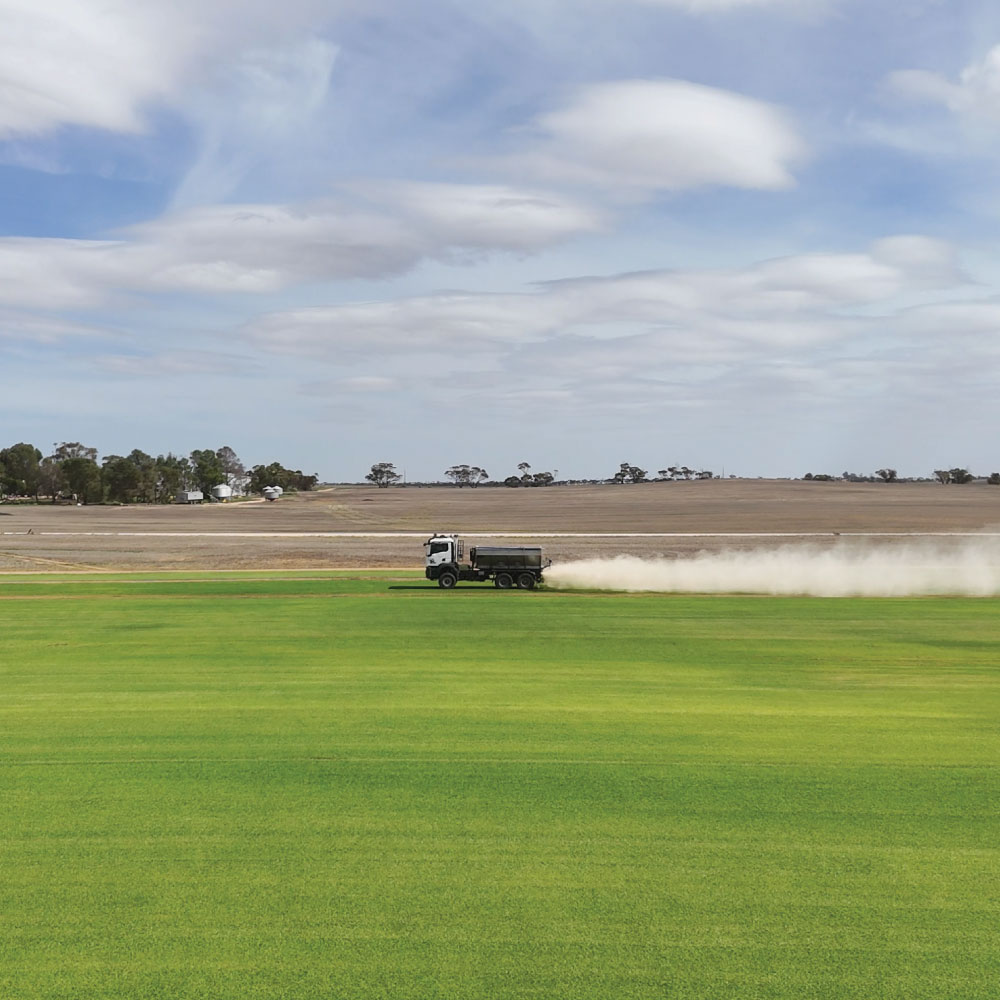
We apply gypsum on the farm via truck spreader quite regularly to help improve soil structure.